You have bought a drone, or have one in mind, and want to put it to professional use.
basic permits
Need a drone permit? We build your application.
Flying outside the open category? Then in Belgium you need an STS, PDRA or SORA. Drone Architect writes your operations manual and your complete application dossier.
who for?
Are you …
a new operator, a sole trader or small drone company that wants to fly outside the open category, with one drone model?
You want to fly more than the open category allows. Higher, further, closer to people or in a restricted zone, which puts you in the specific category.
You already submitted an application with the BCAA, but received comments you do not know how to handle.
What do you want to fly?
Typical applications
- Inspections (solar panels, roofs, silos, bridges, wind turbines …)
- Cleaning at altitude
- Surveying on construction sites
- Filming at events
- Agriculture (monitoring, seeding, spraying)
- …
Working with multiple drones, or looking to scale up your drone operations? Then take a look at Complex authorisations or Industry & Government.
When do you need a permit?
You need a drone authorisation as soon as your flight falls outside the open category.
No permit required – open category
All items must be met.
- Up to 120 metres
- Drone always in sight (VLOS)
- Not over crowds, keeping the distances of your A0 – A3 subcategory
- Class label C0 to C4
- Outside these zones
- A pilot certificate (A1/A3 or A2)
Permit required – specific category
One item is enough.
- Above 120 metres
- Beyond the pilot’s visual line of sight (BVLOS)
- Over people or crowds
- Without a Cx class label
- Inner zones of a CTR, over Seveso sites or ISPS port zones
- An STS, PDRA or SORA, with an operations manual
Prices
What does help with an application cost?
What you need depends on your drone, your flight profile and where you fly. You do not need to know that upfront: we work it out together during a first conversation.
STS-01 / STS-02
- Your flight fits a European standard scenario: VLOS or limited-distance BVLOS over an area free of people. Your drone has a C5 or C6 label.
- From € 2,500 excl. VAT
- 2 to 3 weeks lead time, then fly straight away
- Operations manual, STS declaration, 2 standard locations (OFP), submission to the BCAA
- 1-hour training and walkthrough of your documentation
PDRA
- Your flight falls just outside a standard scenario, but within a scenario that EASA has already assessed in advance.
- From € 5,250 excl. VAT
- 6 to 7 months lead time, of which 4 to 5 months waiting time at the BCAA
- Operations manual, ConOps, PDRA compliance table, 3 standard locations (OFP), submission to the BCAA and feedback round
- 2-hour training and walkthrough of your documentation
SORA
- Your flight doesn’t fit any of the previous scenarios. For example BVLOS over populated areas, over people or critical infrastructure, or with a drone without a CX class label.
- From € 5,500 excl. VAT
- 6 to 7 months lead time, of which 4 to 5 months waiting time at the BCAA
- Operations manual, ConOps, full SORA (ground and air risk, TMPR, containment, OSOs), 3 standard locations (OFP), submission to the BCAA and feedback round
- 2-hour training and walkthrough of your documentation
approach
How does the authorisation process work?
Four steps to your drone authorisation.
Introductory call
- Tell us what you want to fly, with which drone and where.
- You hear straight away which route fits, what it costs and how long it takes.
Quotation
Once you agree, you send us your
- operational details
- insurance pilot
- certificates
Your application takes shape
You answer targeted questions about your case and we build your application.
Dossier submission
- Together we submit your application to the BCAA.
- Once we receive their feedback, we process it immediately.
- Does the BCAA approve your application? Then you will receive your authorisation 1 to 2 weeks later.
Every completed application makes the next one stronger. BCAA feedback goes straight into our templates, so your feedback round stays as short as possible.
Frequently asked questions
FAQ
Basic authorisations
Do I need to own my drone before we start?
No. Feel free to choose your drone during the process, or ask us to help you decide. With the “Tailored intake and analysis” module you get advice on which drone suits your operation, so you avoid an expensive mistake. You can even hold off on buying your drone until your authorisation is approved.
I already have documentation, but the BCAA won’t approve it. What now?
In a “Tailored intake and analysis” we review what you have. Sometimes a targeted rework of a few chapters is enough (at an hourly rate). Sometimes starting over with our template is faster (at the standard package price).
Can I apply for my permit myself?
Yes, you can. The question is whether you have the time to get to grips with the regulations and work through the feedback rounds with the BCAA. We submit an application the BCAA can work with straight away, almost always with a single feedback round.
Can I buy a blank template with you and fill it in myself?
No. Every application needs tailoring to your drone, operation and locations. You supply the information, we make sure your documentation is ready to submit.
Can I scale up or add extra locations later?
Yes. Alongside the included standard locations, you also get a template you can fill in yourself for new locations.
Do you guarantee that my authorisation will be approved?
No, the decision always lies with the BCAA. We commit to delivering a complete and correct application and to processing the feedback until the BCAA can make a decision.
How long does it take to get a drone permit?
For an STS, allow 2 to 3 weeks: you submit a declaration and can then fly straight away. For a PDRA or SORA, a realistic timeframe is 6 to 7 months. Most of that is waiting time at the BCAA (4 to 5 months), which handles applications in order of receipt.
Written by experts
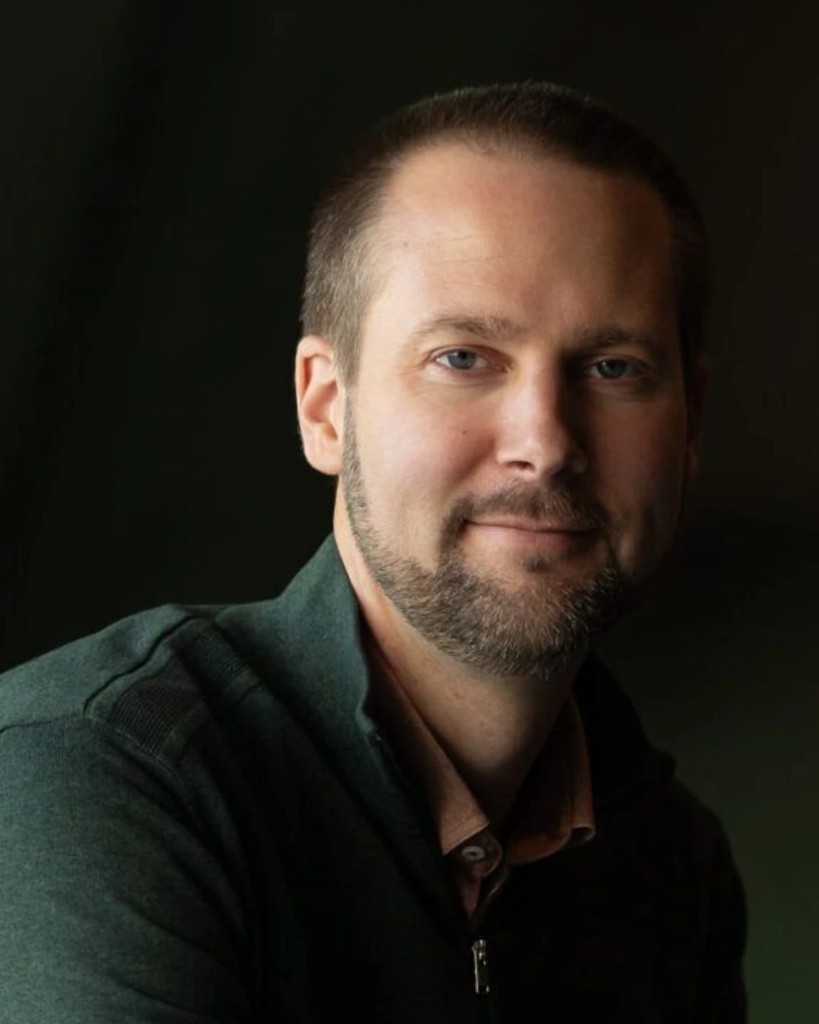
Your application is prepared by the Drone Architect team and given a final check by Jon Verbeke, founder of Drone Architect. Jon is an aerospace engineer (TU Delft) with extensive experience as a drone pilot. He earned his PhD at KU Leuven in 2018 on drones in the horticulture sector.
He trains aviation authority staff in EU drone regulation and the SORA methodology. He has supported BVLOS operations for Elia, Citymesh and Nokia, among others.
Drone Architect has already worked for
Drone Architect werkte al samen met